
It’s not every day you dig through a dried-up lake and find a piece of history staring back at you — but that’s exactly what just happened on Easter Island. And not just “any” history — we’re talking about a brand-new moai statue, the kind of find that makes archaeologists lose their professional cool.
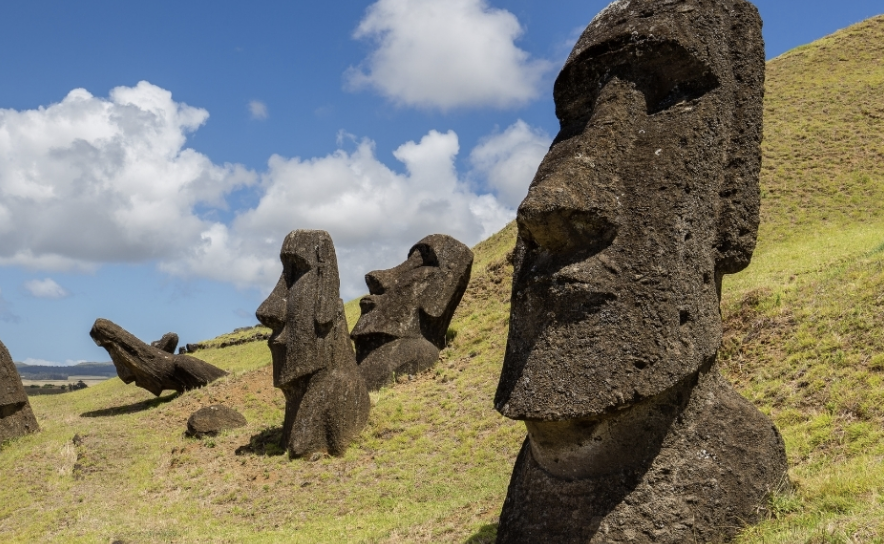
Easter Island is already famous for its roughly 1,000 moai — those giant, solemn-faced stone figures carved between 700 and 1,000 years ago by the Rapa Nui people. But this one? This one was hiding in the bottom of a lake, in the quarry where the statues were originally made. And according to experts, no moai has “ever” been found there before.
“This is a first,” said Terry Hunt, professor of archaeology at the University of Arizona, who’s spent years cataloging every known statue on the island. The new discovery is one of the smallest moai on record — which could mean there are more waiting under the lakebed’s tall reeds.
For the Rapa Nui people, represented by Ma’u Henua vice president Salvador Atan Hito, the significance runs deep: “Nobody knew it existed — even our ancestors didn’t know about this one.”
The timing is no accident. Severe dry conditions have lowered water levels in the crater lake at Rano Raraku, revealing places that have been underwater for centuries.
Hunt says ground-penetrating radar could uncover more statues beneath the sediment. And if history’s taught us anything, it’s that when you find one moai in an unexpected place, you usually find more.
Each moai was carved to honor an important figure, often a leader, and many originally had white coral eyes that gave them a striking, almost haunting gaze.
The largest ever found stands over 30 feet tall and weighs around 86 tons — but the unfinished giant still lying in the quarry could have topped 90 tons if completed.
This latest find isn’t just a win for archaeology — it’s also shaking up the long-standing narrative about Easter Island’s past. New research from Sweden suggests the island wasn’t as isolated as once thought, but rather settled in multiple waves by skilled Polynesian navigators arriving by double canoe.
Now, with technology and climate conditions revealing what’s been hidden for centuries, the story of Easter Island’s mysterious statues might be about to get a whole lot bigger… and maybe a little stranger.