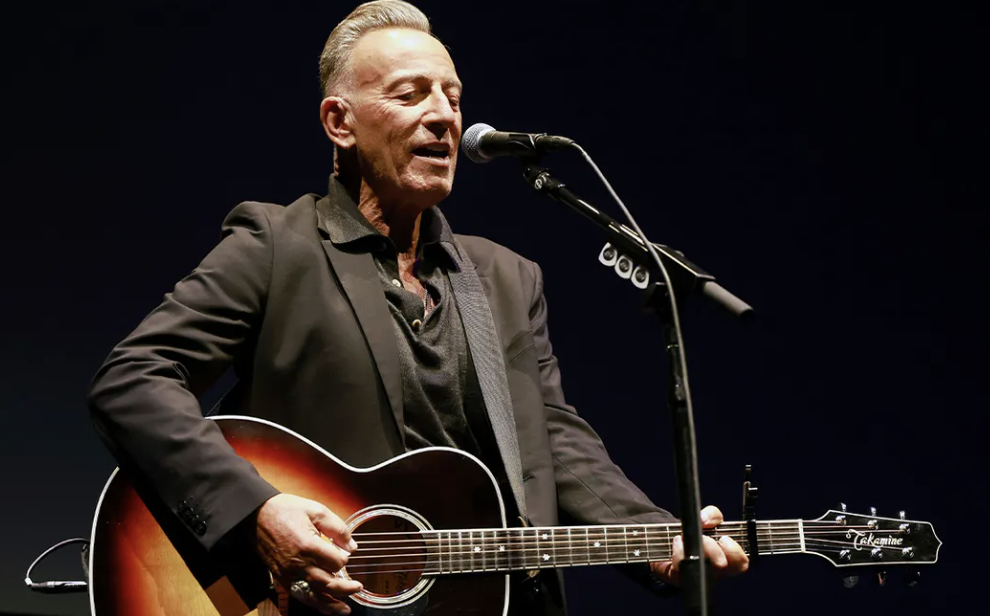
You know how every few months a famous musician drops a protest song and the media treats it like a cultural earthquake, even though most people didn’t ask for it and aren’t playing it on repeat? That’s pretty much what happened here. Bruce Springsteen, now well into his seventies and still clinging tightly to his protest-rock megaphone, released a song called Streets of Minneapolis, aimed squarely at ICE, Donald Trump, and immigration enforcement in general. And almost immediately, the Trump White House responded with something close to a shrug.
The administration’s message was blunt and, frankly, pretty revealing. According to White House spokeswoman Abigail Jackson, they are not spending their time worrying about random songs packed with irrelevant opinions and inaccurate information. Instead, they say they are focused on pushing state and local Democrats to cooperate with federal law enforcement to remove dangerous criminal illegal aliens from communities. In other words, while Springsteen is strumming and sermonizing, the administration says it’s dealing with policy, enforcement, and public safety.
The media reaction, of course, zeroed in on the song itself. Springsteen framed Streets of Minneapolis as a response to what he called state terror being visited on the city. He released it almost immediately after writing and recording it, presenting it as a raw, urgent protest. In the lyrics, he praises protesters, criticizes law enforcement actions, and refers to the president as King Trump, leaning hard into familiar protest imagery. He dedicated the song to what he described as innocent immigrant neighbors and invoked the memory of two individuals, urging listeners to stay free.
NEW: Fox News’ Trace Gallagher CALLS OUT Bruce Springsteen for new anti-ICE anthem:
“It wasn’t too difficult to write considering most of it appears lifted from the DNC handbook.” pic.twitter.com/m3Y6LbUQyj— XRP NESARA-GESARA QFS 3.0 (@NesaraGesara0) January 29, 2026
This isn’t new territory for Springsteen. For years now, he has used nearly every public platform available to take shots at Donald Trump. That includes overseas tours where he adopts his long-standing working-class hero image while lecturing not just the president, but the country and the voters who elected him. To his critics, that contradiction has become impossible to ignore. A man who built a career on American iconography and blue-collar storytelling now routinely scolds the same audience that made him rich and famous.
Politically, Springsteen’s alliances have been clear. He was a vocal supporter of Joe Biden, whose administration oversaw policies that critics argue effectively opened the southern border and created the conditions now driving aggressive enforcement efforts. That border situation became a central issue for Trump, who ran on launching one of the largest deportation initiatives in U.S. history. Springsteen also backed Kamala Harris, who pledged to continue Biden-era immigration policies, further cementing his place on one side of the political divide.
What makes the White House response notable is not its tone, but it’s dismissal. There was no outrage, no extended back-and-forth, no attempt to argue lyric by lyric. Just a flat statement that songs like this are not the priority. From their perspective, the real story is Democratic leaders refusing to cooperate with federal authorities and choosing sanctuary policies instead.
So while Streets of Minneapolis circulates among fans and headlines, the administration is signaling that celebrity protest anthems are background noise. Whether that stance resonates with voters more than a famous rocker’s latest moral lecture is the larger question, and one that will likely matter a lot more than any song released on short notice.