
It’s one of the most enduring mysteries of the 20th century — a tale of ambition, courage, and a vanishing act that has haunted historians and dreamers for nearly 90 years. But now, hold onto your goggles, because scientists believe they might be weeks away from finding Amelia Earhart’s missing plane.
That’s right — Amelia Earhart. The pioneering aviator who captured the world’s attention in the 1930s and vanished without a trace during her attempt to become the first woman to fly around the globe. And now, a tiny speck in the Pacific Ocean called Nikumaroro Island could hold the answer we’ve been chasing for generations.
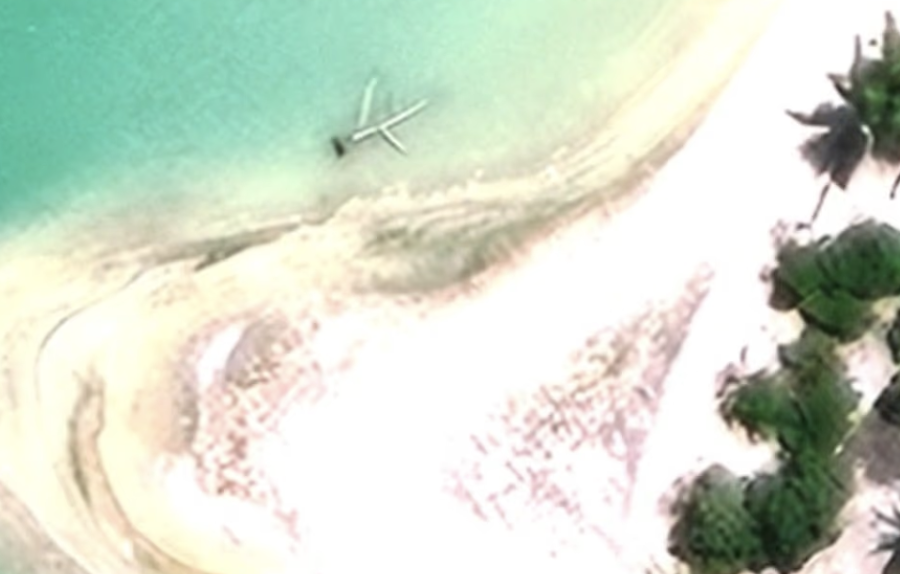
Here’s what’s happening: A team of researchers, engineers, and archaeologists is launching an expedition to investigate what they’re calling the “Taraia Object” — a mysterious shape in the island’s lagoon that first caught attention in satellite images in 2020. Why is this different from the dozens of other Earhart theories out there? Because the object *looks* exactly like an aircraft fuselage and tail. Not metaphorically. Not in theory. Visually. Tangibly. Like the real thing.
And here’s the kicker — this same object? It shows up in aerial photographs taken back in 1938. Just one year after Earhart and her navigator Fred Noonan disappeared. That’s the kind of breadcrumb trail that gets researchers packing their bags.
The expedition, led by Purdue University (where Earhart once worked and inspired generations of future aviators), sets off from Indiana on October 30 and sails from the Marshall Islands to Nikumaroro by November 4. They’ll spend several days on the island, using sonar, remote sensing, and finally underwater excavation to determine whether this strange object is indeed the wreckage of Earhart’s Lockheed Electra 10E.
And if it is? This goes from intriguing to legendary.
Imagine — confirmation that Earhart didn’t crash into the ocean and vanish, but rather made it to land and perished on a remote, desolate island nearly a thousand miles from Fiji. That would flip everything we thought we knew about the final hours of one of the most famous flights in history.
It’s not just about curiosity. It’s about bringing closure to a story that’s lived in the realm of speculation for too long. And it’s about honoring a woman whose legacy still soars today — not just in aviation, but in the fight for equality, independence, and exploration.
If the plane is there, they’ll find it. And when they do, the next step is to bring it home — to Purdue — just like Earhart had planned.
So buckle up. Because in just a few weeks, one of the world’s greatest mysteries might finally, finally get its ending.