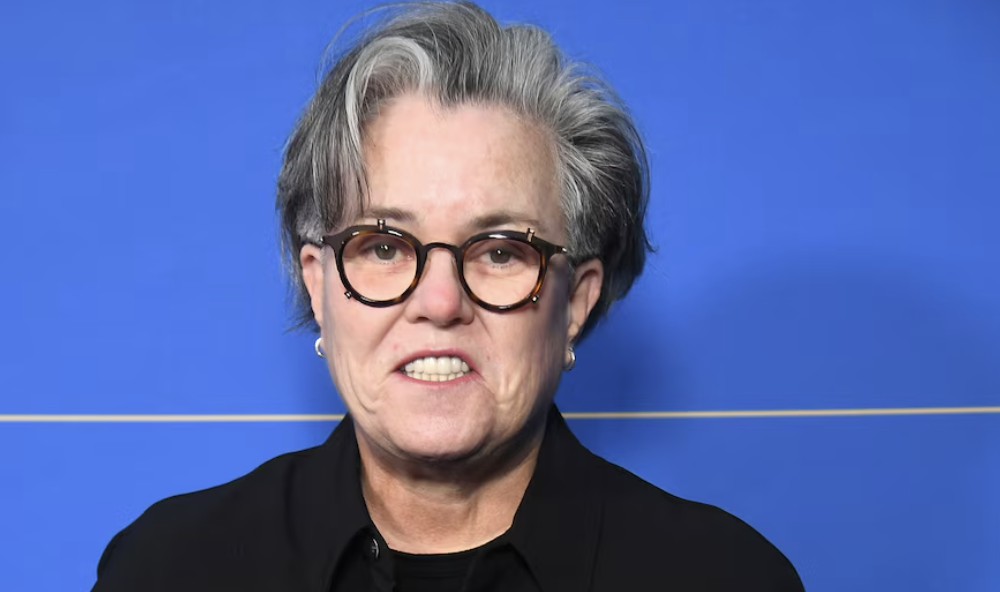
This one’s a wild ride, and not for the faint of heart. Rosie O’Donnell, never one to back down from a headline or a hot mic, is once again sounding the alarm over former President Donald Trump. But this time, it’s not just political—it’s personal, involving her 12-year-old child, autism, and a controversial move out of the United States.
In a recent interview with Jim Acosta, O’Donnell claimed her child—Clay, who is autistic and identifies as non-binary—is “very upset” about Trump, to the point of smashing their hand on the table and shouting “Damn him, damn Trump.”
According to Rosie, her child believes Trump “made us move” for their own safety. That move, of course, was across the Atlantic to Ireland, where the comedian now lives full-time with her family.
Rosie expressed concern over how deeply her own political stances may be influencing her child’s emotional state. “I don’t want my kid to be so affected by it,” she said, repeating more than once, “she has autism,” as if to underline the weight of the situation.
O’Donnell then admitted that even though she doesn’t talk politics all day, her daughter “hears what I’m saying,” and it’s clearly made an impression.
While O’Donnell paints a picture of a frightened family fleeing for safety, critics aren’t buying it. Not even close. Social media erupted with backlash, accusing Rosie of projecting her own political hysteria onto a vulnerable child. Users on X (formerly Twitter) didn’t hold back: “Rosie’s so consumed by Trump hate that she’s poisoning her own autistic daughter with it,” one wrote. Another didn’t mince words: “You ripped your autistic kid from her home because you scared her into believing you guys weren’t safe in America.”
The general sentiment? That this is less about Trump and more about Rosie’s own choices. “Trump didn’t force her to move, that was her decision,” one user said flatly. Another pointed out the obvious: “I am sure her daughter is not on the internet researching Trump.” Critics accused O’Donnell of using her child as a pawn in her political crusade, with more than a few branding the whole situation as “emotional manipulation” or even “child abuse.”
There’s a lot to unpack here. At the core is a child with autism, caught in the crosshairs of a national political grudge match, thousands of miles away from home.
Whether you think O’Donnell is genuinely concerned or recklessly dramatizing her politics, one thing’s clear: the internet isn’t giving her a pass. And her story, instead of stirring sympathy, is stirring outrage.
In the end, what was meant to be a personal reflection on family, safety, and politics turned into a digital firestorm. And like most things Rosie and Trump-related, it’s probably not over yet.