
Okay, let’s just take a moment and soak in what just happened here—because this isn’t just a story about a message in a bottle.
This is a 109-year-old time capsule that washed up perfectly preserved on an Australian beach, carrying the voices of two soldiers headed into one of the deadliest conflicts in human history. I mean, if Hollywood tried to script this, they’d probably tone it down to make it more believable.
So here’s the scene: it’s 1916, World War I is raging across Europe, and two Australian soldiers—Privates Malcolm Neville and William Harley—are on board a steamship bound for the Western Front.
It’s August 15, they’re three days out from Adelaide, and they decide to write cheerful, pencil-written letters and seal them inside a Schweppes bottle. Toss it into the Great Australian Bight. Hope someone finds it.
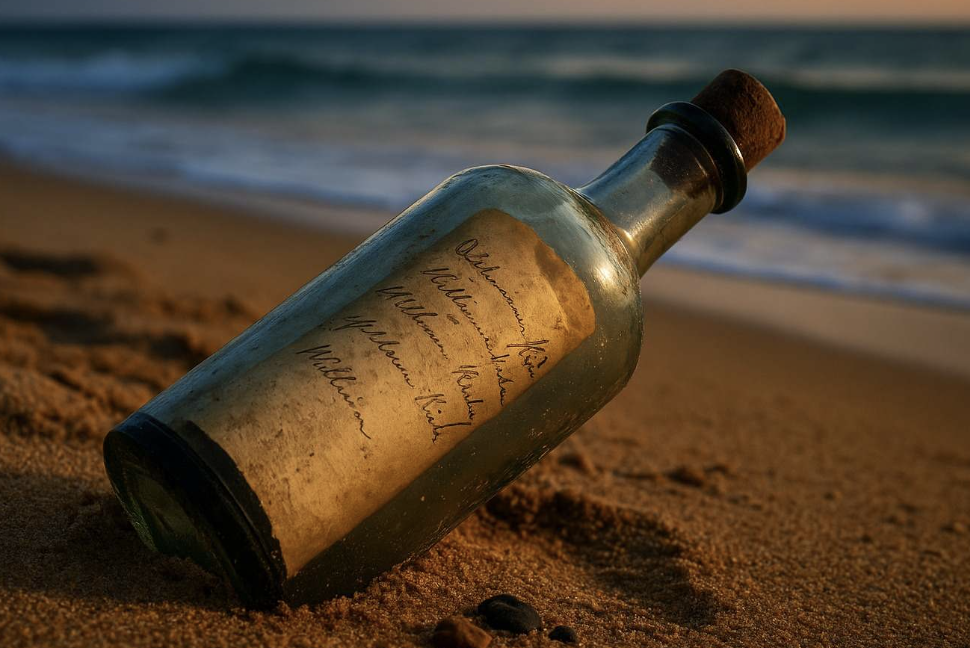
Fast forward 109 years—the world’s unrecognizably different—and a family doing their usual beach cleanup near Esperance spots the bottle nestled in the sand dunes. Not battered by waves. Not crusted with barnacles. Not a smear of ink lost to time. The letters? Still perfectly legible.
Let’s talk about what they said—because this is the part that grabs your chest. Malcolm tells his mother he’s “having a real good time,” jokes about a terrible meal they dumped overboard, and says they’re “as happy as Larry.” Harley, a little more reserved, tells the future finder, “may the finder be as well as we are at present.”
And here’s the gut punch: Malcolm Neville would be killed in action just a year later. Harley? He’d survive the war, but not without scars. He was gassed by the Germans and died in 1934, likely because of it.
Now here’s where it gets wild—Harley’s granddaughter says the discovery felt like “a miracle.” That her grandfather had somehow reached out from the grave. Malcolm’s great-nephew called it “unbelievable,” adding, “It’s just so sad what happened.”
And this isn’t just a story about nostalgia—it’s connection. It’s legacy. It’s voices calling through a century of silence. A reminder that behind the statistics and the medals and the solemn monuments, there were men—real people who laughed, joked, and clung to life as their ship rolled through open water, unsure of what waited on the other side.
If that doesn’t give you goosebumps, I don’t know what will.